
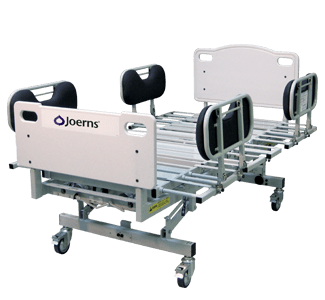
RC 750
Multi-functional bariatric capability in an affordable package
The RC 750 is prepared to handle a patient who may require a bed that can support more weight. The RC 750 is a 750 lb capacity bed frame with three function electric control. The simple to use pull pin system allows caregivers to easily expand the bed frame’s width from 39″ to 54″ to accommodate a variety of body contours and emergency transport through 40″ door frames. The RC 750’s economical price makes it an excellent bariatric bed solution for the alternate care market.
Product Details
- Split frame design for easy delivery and storage
- Expandable bed deck permits transport through doorways as narrow as 40″
- Accommodates mattresses up to 54″ wide
- 3 position, wing type, padded side rails
- 3 functions including hi-low, head (Fowler) and knee gatch
- IV pole and Foley bag holder
- 750 lb weight capacity
- Optional trapeze
- Accommodates mattresses 37″, 39″, 42″, 48″ or 54″ W
- Bed deck length: 84″ (96″ with optional extender)
- Overall frame size: 39.5″ to 56.5″ W x 88″ L
- Deck height: 17″ to 30″
- Head/Footboard width: 38″
- Total weight: 483 lb
- Power requirements: 115 VAC 60 Hz 10.5 AMP
- Warranty: 5 years ‐ workmanship and materials, 1 year ‐ electrical system
Frequently Asked Questions
Adjustable-width beds can improve stability, comfort, positioning, and safe mobility. Wider sleep surfaces may help reduce accidental rollouts while providing caregivers with better positioning options for residents with varying clinical needs.
Healthcare beds improve patient outcomes by supporting safety, mobility, pressure injury prevention, caregiver ergonomics, and resident comfort. As the first and last piece of Safe Patient Handling and Mobility (SPHM) equipment used each day, the bed serves as the foundation of care. Features such as adjustable height, positioning capabilities, and integrated safety technologies can help residents move more safely, support caregiver efficiency, and contribute to better clinical and quality-of-life outcomes.
When evaluating a healthcare bed, organizations should look beyond specifications and consider how the bed performs in daily use. Important factors include resident mobility support, bed articulation, compatibility with the support surface, low-height capability, speed of height adjustment, caregiver ergonomics, durability, and ease of operation. The best bed systems balance resident safety, mobility, pressure injury prevention, and caregiver efficiency while minimizing lifetime ownership costs.
Low beds reduce fall-related injuries by decreasing the distance between the resident and the floor, which can reduce impact forces if a fall occurs. Research suggests that the reduction in impact force begins to diminish beyond approximately 7 inches from the floor, while excessively low bed heights may increase the risk of falls during bed exit and entry. The most effective low bed balances injury reduction with safe resident egress and caregiver accessibility.
Healthcare beds influence outcomes by supporting safe transfers, reducing fall risk, minimizing caregiver strain, promoting comfort, improving positioning, and enabling the use of therapeutic technologies that support mobility, skin integrity, and recovery. [joerns.com], [joerns.com]
The ideal bed height depends on the goal. A low height of approximately 7 inches can help reduce injury severity from falls, an egress height of approximately 18 inches supports safer bed exits and transfers, and a care height of approximately 35 inches helps reduce caregiver strain. Because resident and caregiver needs vary, the best bed systems allow multiple programmable height positions that support resident safety, mobility, and caregiver ergonomics throughout the day.
Technologies that support care quality include smart bed systems, integrated support surfaces, bed-exit monitoring, nurse call connectivity, pressure redistribution therapies, fluid immersion simulation technology, and safe patient handling and mobility solutions.
The EasyCare bed is built for home and residential care settings, with a quieter drive system, a lower deck height for easier transfers, and a design intended to feel less clinical in a home environment. Unlike hospital beds these do not come with a scale, bed exit alarm, or x-ray tray.
Most Joerns support surfaces are compatible across our bed frame line, but bariatric surfaces require a bariatric-rated frame. Check the compatibility section on each product page, or contact us to confirm a specific pairing.
Low beds help reduce fall-related injuries by decreasing the distance between the resident and the floor. However, the lowest bed height is not always the safest. A well-designed low bed should balance injury reduction with safe resident egress, providing a low height for fall mitigation while allowing quick adjustment to an appropriate transfer and standing height. Beds that reach approximately 7 inches from the floor can help achieve both goals as part of a comprehensive falls management program.
Administrators should choose equipment that works for caregivers, not equipment that makes caregivers work harder. While purchase price is important, factors such as ease of use, resident outcomes, staff satisfaction, durability, maintenance requirements, training needs, and total cost of ownership often have a greater long-term impact. The best equipment investments support both quality care and a positive caregiver experience.
Equipment that helps reduce caregiver injuries includes patient lifts, repositioning devices, integrated bed systems, therapeutic support surfaces, and mobility equipment. Bed systems are especially important because they support both resident and caregiver safety through multiple height positions. Low height (approximately 7 inches) can help reduce fall-related injuries, egress height (approximately 18 inches) supports safer bed exits and transfers, and care height (approximately 35 inches) helps reduce caregiver strain. Adjustable equipment that supports safe patient handling and mobility can help create a safer care environment for both residents and caregivers.
The leading predictors of falls in nursing homes are a history of previous falls and changes in environment, including new admissions and transfers. Many falls occur within the first 48 hours of entering a new care setting, when residents are adapting to unfamiliar surroundings and may have reduced mobility or functional abilities. Effective fall prevention combines resident assessment, mobility support, appropriate bed systems, monitoring technologies, and caregiver education.
Evidence-based falls management uses clinical research, risk assessment, monitoring technology, therapeutic surfaces, appropriate bed heights, and proven care protocols to reduce fall risk and injury severity while maintaining resident dignity and mobility.
Best practices include individualized risk assessments, proper bed selection, low-height bed use, bed-exit monitoring, caregiver training, environmental safety measures, mobility support, safe transfer protocols, and routine review of fall incidents to guide continuous improvement. [joerns.com], [joerns.com]
Smart bed systems, connected care platforms, resident monitoring solutions, and advanced support surfaces can help detect patient movement and identify potential fall risks. These technologies provide caregivers with greater visibility into resident activity, helping them recognize changes earlier, prioritize interventions, and support safer care environments. Nurse call integration and movement alerts can further improve awareness when assistance may be needed.
An effective falls prevention program combines resident risk assessment, staff education, mobility support, safe patient handling practices, low-height bed systems, therapeutic support surfaces, monitoring technologies, and ongoing outcome evaluation. Facilities should consider not only a bed’s low height, but also its ability to support safe egress height for residents and appropriate care height for caregivers. A multidisciplinary approach helps reduce both fall frequency and injury severity while supporting resident mobility and caregiver safety.
Facilities can improve resident safety by integrating fall prevention, pressure injury prevention, safe patient handling and mobility programs, advanced support surfaces, staff education, and monitoring technologies into everyday care workflows.
Post-acute care facilities can improve staff efficiency through equipment standardization, streamlined workflows, integrated bed systems, resident monitoring technologies, safe patient handling equipment, and mobility solutions. Standardization helps caregivers work more consistently, reduces training requirements, simplifies maintenance, and improves equipment utilization. When paired with intuitive technology and efficient processes, these strategies help caregivers spend more time focused on resident care.
Yes. Our bariatric-rated surfaces are sized and weight-tested to pair with frames like the Bari 10A. Standard surfaces are not rated for bariatric use and shouldn’t be substituted.
The most effective falls prevention programs combine environmental safety measures, staff education, appropriate bed systems, resident monitoring, and mobility support. Facilities can reduce fall risk by using wider low-height beds, improving visibility of at-risk residents, implementing assessment protocols, and utilizing technologies that detect movement or changes in resident status. Joerns®’ Falls Management Solutions and low-height bed options such as the EasyCare® and UltraCare® XT support these efforts while helping facilities improve resident safety.
The best bed for fall prevention is one that allows residents to safely enter and exit while minimizing injury risk if a fall occurs. Features such as low deck height, adjustable positioning, caregiver-friendly controls, and stability enhancements are important considerations. Organizations evaluating fall prevention programs should compare solutions such as EasyCare®, UltraCare® XT, and the RC Ultra Hi-Lo 850, all designed for long-term care environments.