
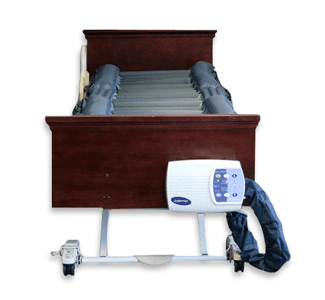
DermaFloat® APL
The DermaFloat® APL is a unique therapy system that provides pressure redistribution by alternating pressure between adjacent (A-B) air cells. The alternating pressure in the therapy cells automatically alternates on a regular basis to maximize wound healing. Alternating pressure can aid the healing process by increasing circulation to the resident’s wounds. The DermaFloat APL also offers low air loss therapy through an integrated air delivery system beneath the therapy pad. Alternating pressure and low air loss therapy have been demonstrated to be valuable aids in the treatment of those identified as being at risk of developing pressure ulcers.
Product Details
- Twenty individual cells help to evenly distribute resident’s weight and maximize pressure redistribution
- Integrated low air loss delivery system: Up to 40 liters airflow per minute when the alternating cycle is complete or unit is in static therapy mode
- Low shear and low friction therapy pad is treated with an antibacterial and antifungal agent and is fluid proof and moisture vapor permeable
- CairRails risk management side air bolsters
- Lightweight mattress rolls up for portability and ease of storage
- Three alternating cycle times
- Eight comfort control settings maximizes resident compliance and promotes healing
- Fowler Boost inflates sacral section enhancing pressure redistribution when head of bed is elevated at 30º or greater
- Automatic panel lockout to avoid unwanted or unintended adjustments
- Audible power failure alarm with reset
- Mattress size: 36″ W x 80″ L x 8″ D
- Maximum weight capacity: 350 lbs.
- CPR quick deflation
- UL/CUL Classified
- Pressure Redistribution: Stage 1 – 4 Pressure Injuries; Rehabilitation; Burns; Neurology; Dermatology; Amputations
- Pain Management: AIDS; Arthritis; Oncology
Frequently Asked Questions
Administrators should choose equipment that works for caregivers, not equipment that makes caregivers work harder. While purchase price is important, factors such as ease of use, resident outcomes, staff satisfaction, durability, maintenance requirements, training needs, and total cost of ownership often have a greater long-term impact. The best equipment investments support both quality care and a positive caregiver experience.
Equipment that helps reduce caregiver injuries includes patient lifts, repositioning devices, integrated bed systems, therapeutic support surfaces, and mobility equipment. Bed systems are especially important because they support both resident and caregiver safety through multiple height positions. Low height (approximately 7 inches) can help reduce fall-related injuries, egress height (approximately 18 inches) supports safer bed exits and transfers, and care height (approximately 35 inches) helps reduce caregiver strain. Adjustable equipment that supports safe patient handling and mobility can help create a safer care environment for both residents and caregivers.
The leading predictors of falls in nursing homes are a history of previous falls and changes in environment, including new admissions and transfers. Many falls occur within the first 48 hours of entering a new care setting, when residents are adapting to unfamiliar surroundings and may have reduced mobility or functional abilities. Effective fall prevention combines resident assessment, mobility support, appropriate bed systems, monitoring technologies, and caregiver education.
Evidence-based falls management uses clinical research, risk assessment, monitoring technology, therapeutic surfaces, appropriate bed heights, and proven care protocols to reduce fall risk and injury severity while maintaining resident dignity and mobility.
Best practices include individualized risk assessments, proper bed selection, low-height bed use, bed-exit monitoring, caregiver training, environmental safety measures, mobility support, safe transfer protocols, and routine review of fall incidents to guide continuous improvement. [joerns.com], [joerns.com]
Smart bed systems, connected care platforms, resident monitoring solutions, and advanced support surfaces can help detect patient movement and identify potential fall risks. These technologies provide caregivers with greater visibility into resident activity, helping them recognize changes earlier, prioritize interventions, and support safer care environments. Nurse call integration and movement alerts can further improve awareness when assistance may be needed.
Yes, when paired with a compatible bed frame and sensor, Connexio will provide real-time notifications to staff.
An effective falls prevention program combines resident risk assessment, staff education, mobility support, safe patient handling practices, low-height bed systems, therapeutic support surfaces, monitoring technologies, and ongoing outcome evaluation. Facilities should consider not only a bed’s low height, but also its ability to support safe egress height for residents and appropriate care height for caregivers. A multidisciplinary approach helps reduce both fall frequency and injury severity while supporting resident mobility and caregiver safety.
Facilities can improve resident safety by integrating fall prevention, pressure injury prevention, safe patient handling and mobility programs, advanced support surfaces, staff education, and monitoring technologies into everyday care workflows.
Post-acute care facilities can improve staff efficiency through equipment standardization, streamlined workflows, integrated bed systems, resident monitoring technologies, safe patient handling equipment, and mobility solutions. Standardization helps caregivers work more consistently, reduces training requirements, simplifies maintenance, and improves equipment utilization. When paired with intuitive technology and efficient processes, these strategies help caregivers spend more time focused on resident care.
Repositioning frequency should be individualized based on resident risk, mobility status, skin condition, and clinical protocols. Advanced support surfaces can help redistribute pressure and reduce tissue loading between repositioning events, supporting a comprehensive pressure injury prevention strategy.
Healthcare beds influence outcomes by supporting safe transfers, reducing fall risk, minimizing caregiver strain, promoting comfort, improving positioning, and enabling the use of therapeutic technologies that support mobility, skin integrity, and recovery. [joerns.com], [joerns.com]
Technologies that support care quality include smart bed systems, integrated support surfaces, bed-exit monitoring, nurse call connectivity, pressure redistribution therapies, fluid immersion simulation technology, and safe patient handling and mobility solutions.
Therapeutic support surfaces improve wound healing by redistributing pressure, reducing shear and friction, managing heat and moisture, and supporting circulation. In addition to protecting vulnerable tissue, effective support surfaces should also support resident mobility and repositioning, helping residents maintain function while creating an environment that promotes skin integrity and tissue recovery.
Healthcare facilities can reduce pressure injury rates through proactive risk assessment, integrated bed and support surface systems, pressure management technologies, staff education, moisture management, and early intervention. Repositioning and mobility programs are especially important because they help reduce prolonged tissue loading, support circulation, and address the risks associated with immobility. A comprehensive prevention strategy combines technology, clinical protocols, and resident mobility to support skin integrity and wound prevention.
Managing a single full-thickness pressure injury can cost up to $50,000, while pressure injuries collectively contribute billions of dollars in annual healthcare spending. Prevention programs can help avoid these significant treatment costs and associated regulatory and legal risks.
Low air loss therapy is a widely used intervention in facilities managing residents at high risk for pressure injuries. Our clinical resources page has published studies and facility case data available on request.
Pressure injury prevention requires a combination of regular repositioning, risk assessment, skin monitoring, nutritional support, and therapeutic support surfaces. Facilities that implement comprehensive prevention programs are often able to reduce pressure-related complications, improve resident outcomes, and lower treatment costs. Joerns supports prevention efforts through its PevaMatt® mattresses, P.R.O. Matt® Plus system, and Dolphin® Fluid Immersion Simulation® technology.
Pressure injuries occur when prolonged pressure reduces blood flow to the skin and underlying tissue. Elderly patients are particularly vulnerable because of reduced mobility, fragile skin, chronic illness, and nutritional challenges. Common risk areas include the heels, hips, tailbone, and shoulders. Facilities can reduce risk through clinical prevention programs, therapeutic support surfaces, and advanced technologies available through Joerns®’ Advanced Wound Care Solutions.
The best mattress for pressure injury prevention depends on the resident’s clinical needs and should be selected as part of a complete bed system. Factors such as mobility, pressure injury risk, skin condition, and moisture management requirements should be assessed first. When a support surface is paired with the appropriate bed frame and care plan, the combined system can help optimize pressure redistribution, support repositioning, and improve resident outcomes.
Fluid Immersion Simulation® (FIS) technology creates the sensation of floating in water by allowing the body to immerse into the support surface. Similar to the principles of air fluidized surfaces, FIS technology helps distribute pressure across a larger contact area to support pressure management, resident comfort, and wound care goals.